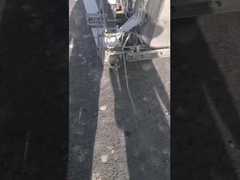
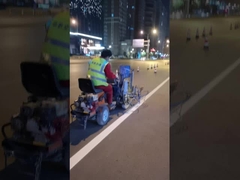
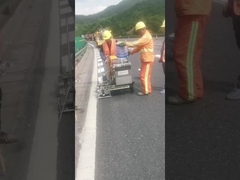
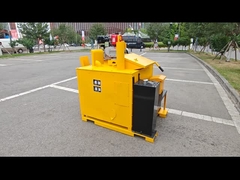
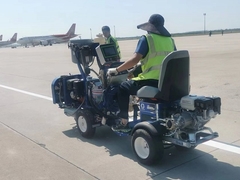
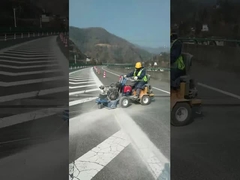
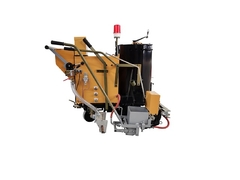
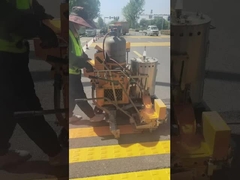
Brief: See the journey from feature description to real application in this concise overview. This video demonstrates the HG-20MM-II two-component road marking machine in action, showing how its dual-compartment scraping system mixes and applies thermoplastic paint for durable road markings. Watch as we explain the operational process, from material mixing to final line application, highlighting its environmental benefits and construction efficiency for professional B2B audiences.
Related Product Features:
Features a double compartment scraping system for applying two-component thermoplastic road markings.
Equipped with two 60L paint cylinders and two 25kg glass bead tanks for continuous operation.
Electric stirring shaft ensures thorough mixing of components at 650r/min for consistent chemical reaction.
Offers adjustable marking thickness from 1.2mm to 2.5mm to meet various project requirements.
Supports multiple marking widths including 100mm, 200mm, 300mm, 400mm, and 450mm with interchangeable scoops.
Provides high wear resistance and excellent reflectivity for long-lasting, visible road markings.
Compact design with dimensions of 1200*900*1100mm and weight of 162kg for manageable transport.
Self-dropping spraying system ensures uniform material application without external pressure.
FAQs:
What is the main advantage of the scraping method over spraying for two-component road marking?
The scraping method produces thicker markings (1.2-2.5mm), offers longer wear resistance, provides better reflectivity, and ensures more uniform mixing compared to spraying methods.
How does the machine mix the two components for the chemical reaction?
The machine stores the two coatings in separate compartments within the same barrel. After discharge, an electric stirring shaft mixes them thoroughly at 650r/min, and the chemical reaction completes in the crossing hopper before application.
What marking widths can this machine produce and how are they changed?
The machine can produce markings in widths of 100mm, 200mm, 300mm, 400mm, and 450mm. Width changes are achieved by replacing the scoops, allowing flexibility for different project specifications.
What are the environmental benefits of using this two-component marking system?
Two-component marking is more environmentally friendly than hot melt marking, as it involves a chemical reaction at ambient temperatures, reducing energy consumption and emissions during application.